
Texas Court Records After Arrest
After a jail arrest in Texas, the first public trail is often a booking record. That booking record can show the jail, booking date, charge label, bond amount, and custody status. The court record starts when a complaint, information, indictment, or related filing reaches the court. From that point forward, the court file is the better source for charge status and case events. A jail roster answers "is the person in custody." A court case answers "what charge was filed, what happened in court, and whether there was a conviction, dismissal, or other result."
Texas court records after arrest should not be treated as the same thing as arrest records. Arrest and booking material belongs with Texas inmate records. Booking photos belong with Texas jail roster mugshots. The court file is narrower but often more important because it shows the formal accusation and the court's action on that accusation. The same incident may have a roster charge, a prosecutor-filed charge, and a final judgment with different wording.
The statewide court portal described in the research is re:SearchTX, which presents itself as a case-information source for all 254 Texas counties where records are available.
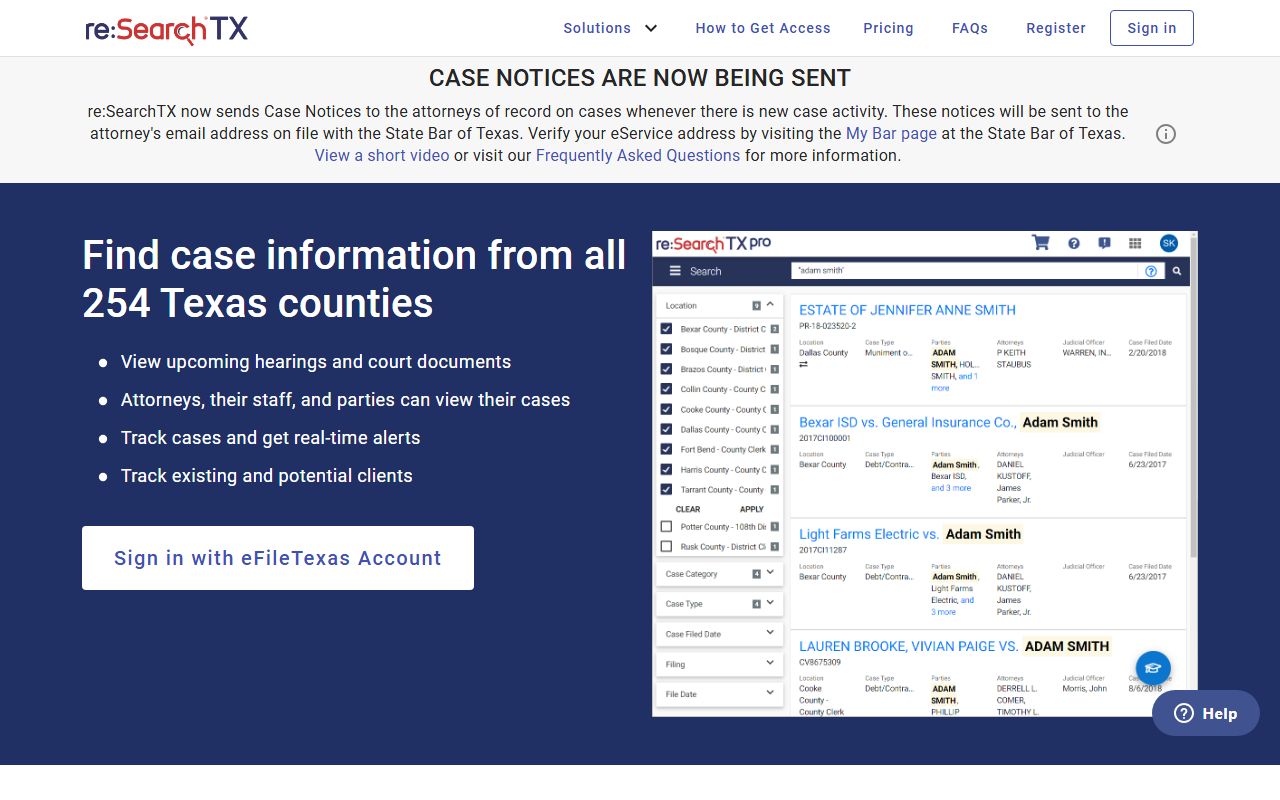
That statewide portal can be a useful starting point, but county clerk and district clerk systems still matter when the local record is more complete.
Texas Trial Court Structure
Texas criminal cases are handled through a county-based and district-based trial court structure. Misdemeanor cases commonly move through county-level courts, while felony cases are usually handled in district court after indictment or another proper charging instrument. Municipal courts and justice courts can also appear in lower-level criminal or magistration contexts. Because court administration is local in many ways, a statewide search may point to a case, but county clerk or district clerk records often control the deeper docket, filings, and certified copies.
re:SearchTX is the statewide access layer named in the research, and the Texas Judicial Branch open-records policy notes that judicial administrative records under Rule 12 are distinct from court case records. That distinction matters when a request is denied by the wrong office. Court case documents are usually requested through the clerk for the court that filed or maintains the case. Jail records are requested from the sheriff or jail. TDCJ records are requested from the state corrections department after transfer.
Find Court Records After Arrest
A court-record search after a Texas jail arrest works best when the county is known. The booking county points to the likely prosecutor and trial court, though transfers and warrants can complicate the path. Use the jail roster to confirm the arrest and custody county. Then search re:SearchTX or the county clerk and district clerk portals for the defendant's name. If the case is not yet visible, check again after the filing window or contact the clerk, because court records may lag behind jail intake.
- Open re:SearchTX or the clerk portal for the county where the arrest was booked.
- Search by defendant name first, then narrow by case number, filing date, court, or charge when the portal allows it.
- Open the case detail and compare the filed charge to the booking charge listed on the jail roster.
- Check the docket for bond hearings, arraignment, reset dates, motions, plea settings, trial settings, and disposition.
- Request copies from the clerk if the portal shows a case but withholds the document image.
The County Directory helps route a search to the county that controls the jail booking and the local court offices. For a person already serving a TDCJ sentence, the court record and the TDCJ record answer different questions: the court file shows the case history, while the TDCJ locator shows current state custody.
Charges Filed After Arrest
Booking happens at the jail, but the court record depends on a charging document. A complaint may support the first appearance or start certain cases. An information is a prosecutor-filed accusation used in many criminal matters. An indictment is returned by a grand jury and is common in serious felony cases. The exact path depends on offense level, prosecutor decisions, and court assignment.
| Complaint | Information | Indictment | |
|---|---|---|---|
| Filed By | Officer or prosecutor | Prosecutor | Grand jury |
| Common For | Initial accusation or lower-level matters | Many misdemeanor and some felony procedures | Serious felony prosecution |
| Public Use | Shows the alleged offense basis | Shows the formal charge chosen by the prosecutor | Shows the grand jury charge |
| Search Tip | May appear early | May replace a booking label | May appear after delay from arrest |
Texas Charge Status
Charge status can change after a jail arrest. A booking charge may be amended, reduced, enhanced, dropped, or replaced. A dismissed charge is not the same as a conviction. A pending charge is still unresolved. A no-bill means a grand jury did not return an indictment on that matter. Some portals use local shorthand, so read docket entries with care and confirm with the clerk when the status controls a legal or employment decision.
| Status | What It Means |
|---|---|
| Pending | The case or charge is still open and no final disposition appears. |
| Amended or Reduced | The charge wording or level changed after review by the prosecutor or court. |
| Dismissed | The court record shows that the charge was ended without conviction on that count. |
| No-Billed | A grand jury did not indict the charge presented to it. |
| Convicted | The record shows a guilty plea, verdict, or other judgment of conviction. |
For statewide public-record framing, the source statute is Texas Government Code Chapter 552.
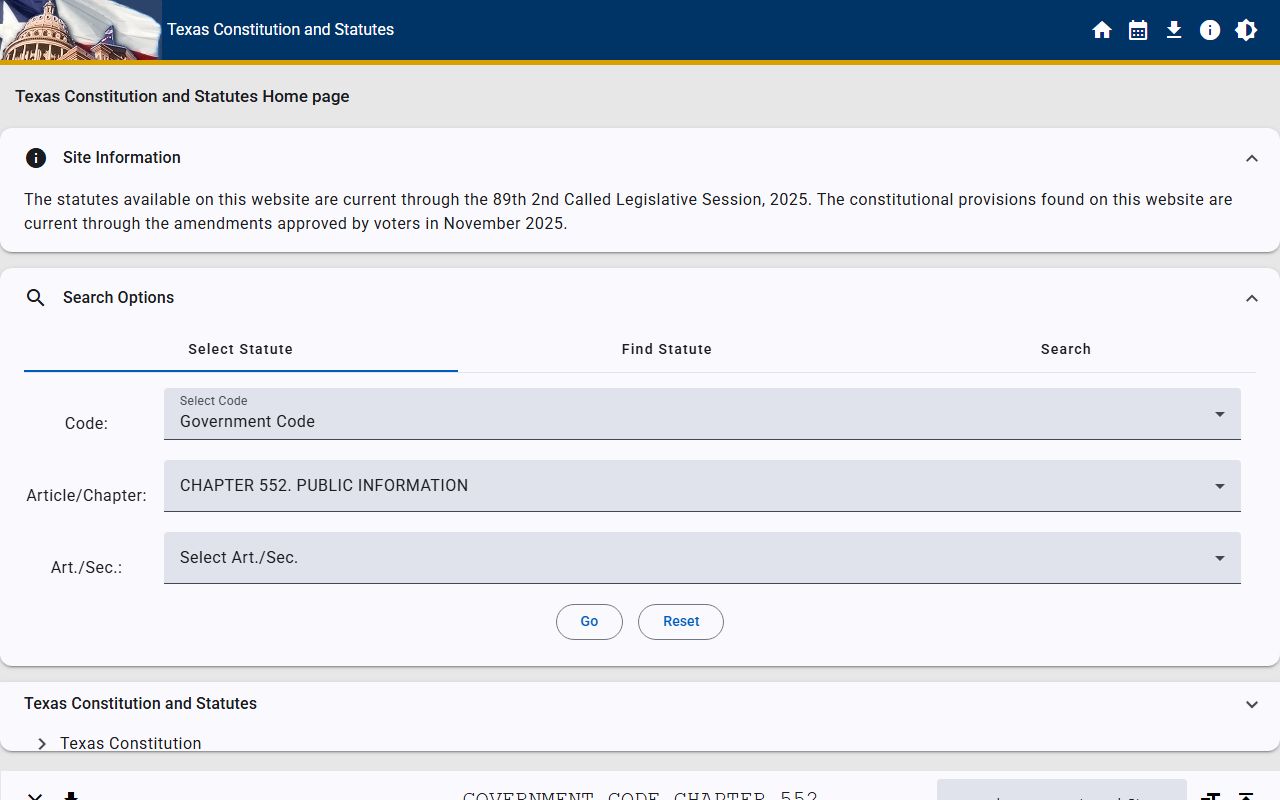
Chapter 552 is relevant to agency records, while court case documents still follow court and clerk access rules.
Bond After Texas Arrest
Bond information often appears first in the jail record and then in the court docket. A magistrate or court may set cash bond, surety bond, personal bond, or a no-bond hold. A detainer is a hold from another agency, such as another county, TDCJ, federal authorities, or ICE. Bond schedules and local procedures vary by county, and a bond amount on a roster may not show all release conditions. Always compare the jail roster with the latest court docket when release status is important.
| Bond Type | How It Works |
|---|---|
| Cash Bond | The court requires cash posted with the proper office before release. |
| Surety Bond | A licensed bondsman posts a bond under local court and jail rules. |
| Personal Bond | The person may be released on a promise to appear, sometimes with conditions. |
| No-Bond Hold | The person cannot be released on that matter until the hold changes. |
| Detainer | Another agency has asked the jail to hold or notify before release. |
Charges Versus Convictions
Being arrested and charged is not the same as being convicted. A charge is an accusation. A conviction requires a guilty plea, verdict, or judgment. Court records after a jail arrest may show both charged counts and final counts, and those may not match. This difference is one reason a court record matters more than a booking label for background understanding.
| Charge | Conviction | |
|---|---|---|
| Stage | Accusation after arrest or filing | Final judgment or plea result |
| Proof | Based on probable cause or filing decision | Based on plea, verdict, or court finding |
| Record Meaning | Shows what was alleged | Shows legal responsibility found by the court |
Texas Sealed Arrest Records
Texas has legal processes that can limit public access to eligible arrest and court records. Expunction can remove or destroy qualifying records in narrow situations. An order of nondisclosure can seal certain records from the general public while leaving limited access for agencies allowed by law. Eligibility depends on the charge, disposition, waiting period, criminal history, and court order. A dismissed case does not vanish on its own.
| Order of Nondisclosure | Expunction | |
|---|---|---|
| Public Visibility | Hidden from many public searches | Removed or treated as not existing for many purposes |
| Agency Access | Some agencies may still access it | Access is more sharply limited after the order |
| Typical Trigger | Eligible disposition and court order | Eligible dismissal, acquittal, pardon, or no-charge outcome |
Texas IVSS Notifications
Court records show case events, but many people also need custody alerts. Texas IVSS-Counties is the county notification channel identified in the research after the state transition from VINE. It can help with notices tied to custody and court events, but it is not a substitute for reading the court docket or the jail roster. Use it as an alert tool, then verify the actual record with the clerk or jail.
The notification portal is Texas IVSS-Counties.
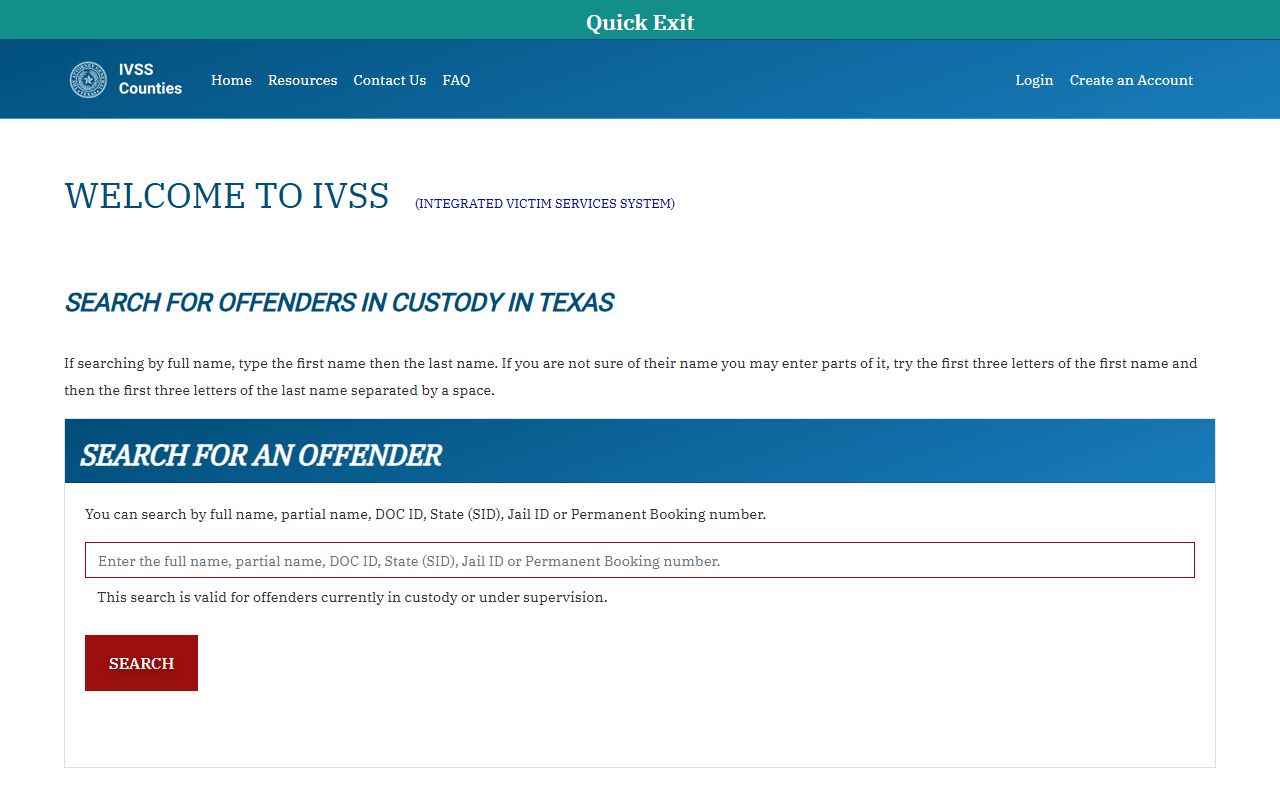
IVSS is most useful when a victim, witness, or family member needs event notice after an arrest rather than a certified court copy.
Background Check Limits
Casual court lookup and formal background screening are not the same. Employers, landlords, insurers, creditors, and other regulated users must follow the Fair Credit Reporting Act and any other law that applies to their use. Public court portals can be incomplete, delayed, or limited by local rules. For any regulated decision, use proper legal process and verify the disposition with the court that maintains the case.
Important: This information is not a consumer report and may not be used for FCRA-covered screening decisions.
After Conviction and Transfer
A Texas court record may show a conviction, sentence, and commitment order before the person appears in the state prison locator. The jail roster may then stop being the best source because the person has moved from county custody to TDCJ custody. The court file remains the source for the charge history and judgment, while the TDCJ profile becomes the better source for current unit, state custody status, and projected release information.
For state custody after a court sentence, use the TDCJ inmate search.
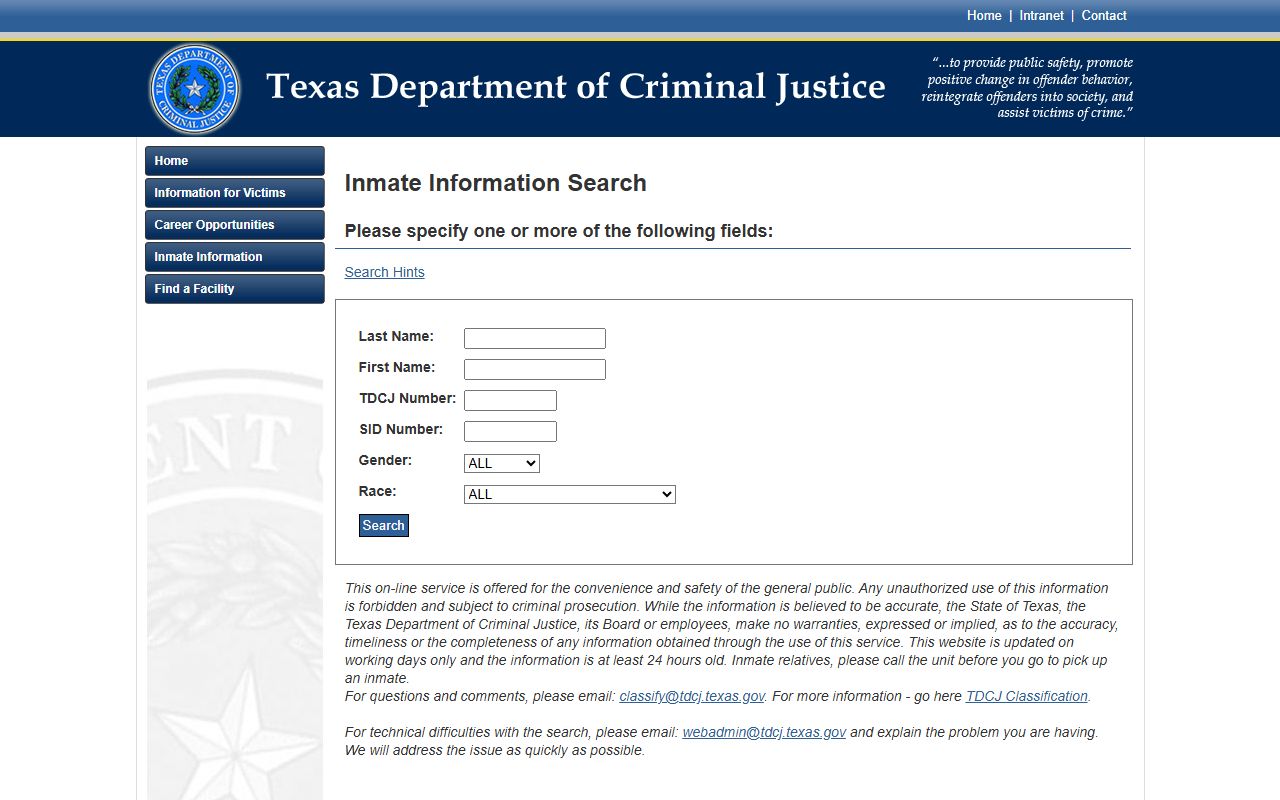
This distinction keeps the court record, county jail record, and TDCJ custody record in their proper lanes after sentencing.
Restricted Arrest Court Records
Not every court record after a Texas arrest is fully public online. Juvenile matters, sealed records, expunged records, protective details, medical information, victim information, and active investigative material may be restricted. Some portals show a case number without document images. Others require an account, clerk review, or a written request. When a portal result is missing, the next step is not to assume the case does not exist. Check the booking county, the proper clerk, and any TDCJ or federal custody channel that may explain a transfer.