
How Texas Inmate Records Work
Texas does not operate one combined roster for every person in jail or prison. County sheriffs and local jail administrators maintain booking records for people held in county custody. Those records cover many pretrial detainees, short county sentences, local holds, and people waiting for transfer. The Texas Department of Criminal Justice, usually shortened to TDCJ, maintains a separate statewide locator for people in state prison, state jail, and related TDCJ custody. A person can move from a county jail record to a TDCJ inmate record after sentencing and transfer, so the same name may need to be checked in more than one place.
The research file identifies the statewide channel stack as county jail rosters for local custody, TDCJ for state custody, the Bureau of Prisons for federal custody, ICE ODLS for immigration detention, Texas IVSS-Counties for custody and court-event notifications, and re:SearchTX for statewide court-record access where records are available. These systems answer different questions. A county roster can show a fresh booking and bond status. TDCJ can show location, offenses, incarceration history, and projected release information. BOP and ICE are federal systems, and Texas IVSS is for notification rather than a full jail record.
The TDCJ inmate information hub describes the official online, email, and telephone routes for statewide prison information at TDCJ inmate information.
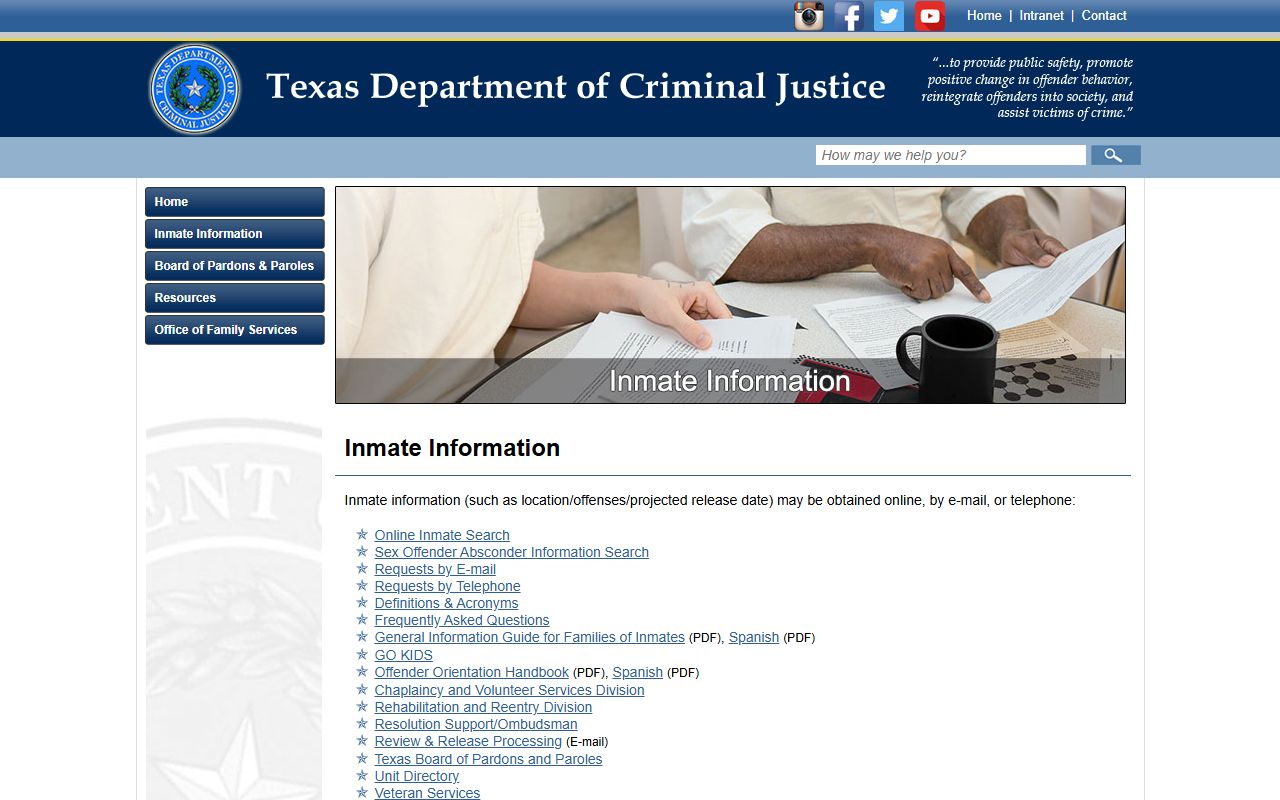
That hub is the clearest first stop when a Texas inmate record may have moved from county jail custody into the state prison system.
Find Texas Inmate Records
The fastest route is a custody decision tree, not a broad name search. Start with the most likely holding system. If the person was arrested in the last few days, the county that made or received the arrest usually controls the jail record. If the person has been convicted and transferred, TDCJ is the better search. If the case is federal, BOP has its own locator. If immigration detention is the issue, ICE ODLS is separate from both county and TDCJ data. For notices rather than a record copy, Texas IVSS-Counties may be the right tool.
- Search the TDCJ inmate locator when the person may be serving a state sentence or held in a TDCJ facility.
- Use the County Directory when the person was recently arrested, has a pending county case, or may be in a local jail.
- Search the BOP inmate locator for federal prison custody from 1982 to the present.
- Use the ICE Online Detainee Locator System for immigration detention, usually by A-number or by full identity details.
- Register through Texas IVSS-Counties when the need is notification of custody or court events.
Names alone can be weak search keys in Texas because large counties often have many similar names. Add date of birth, booking number, TDCJ number, SID, A-number, county, or facility when the system allows it. If an online roster does not return a match, the next step is usually the holding county jail, a records request to the sheriff or jail records unit, or the TDCJ email request route for state-prison information.
The official search form for sentenced state custody is the TDCJ online inmate search.
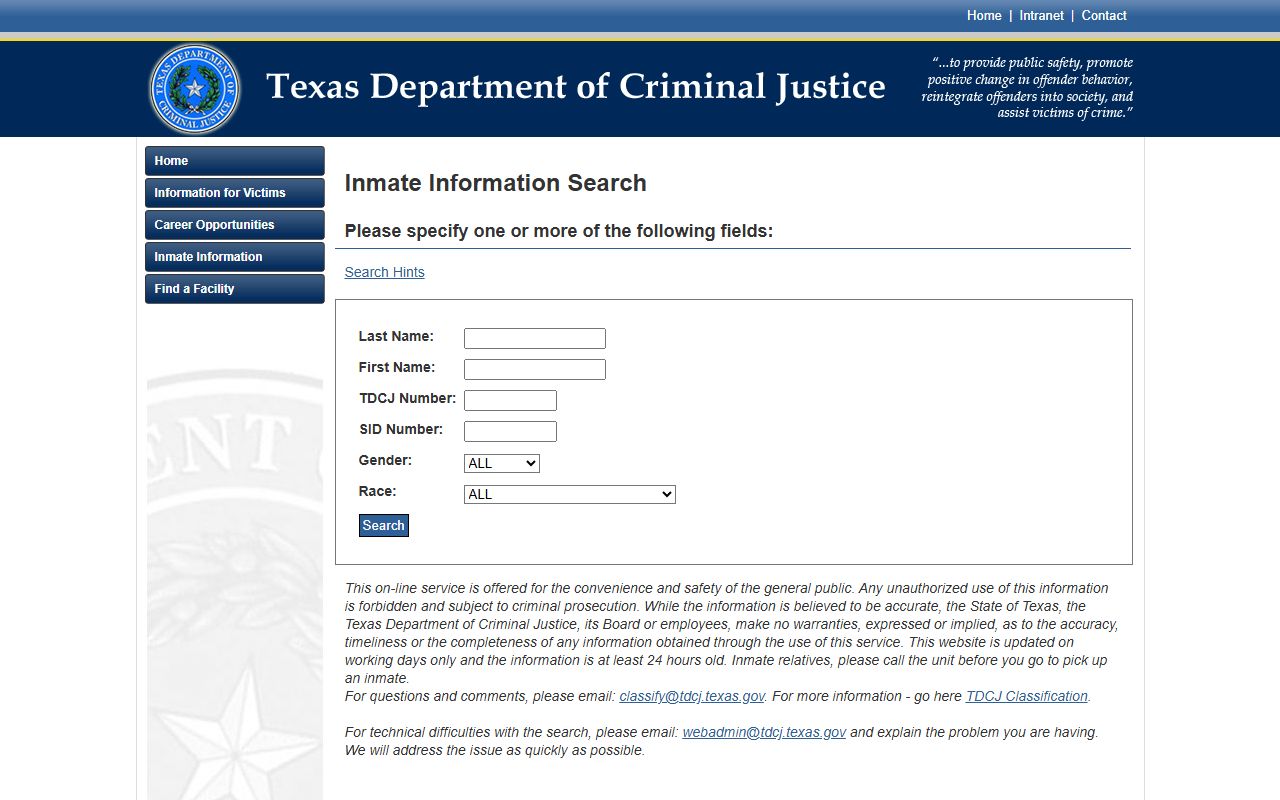
Use that state locator only for TDCJ custody. It will not replace a county jail roster for a person booked on a new local arrest.
Texas Custody Channels
Each custody channel has a different owner and public-record boundary. County jail records are local records. TDCJ inmate records are state correctional records. BOP and ICE records are federal. re:SearchTX is court-facing, so it helps with case information after charges are filed, but it is not a jail custody list. Texas IVSS-Counties replaced VINE for county notification functions on September 1, 2025, according to the Texas Attorney General victim-notification material in the research.
| Custody or Record Need | Run By | Where to Look | Best Use |
|---|---|---|---|
| Pretrial or short county sentence | County sheriff or jail | County jail roster | Recent bookings, bond, local facility, court holds |
| State prison or state jail | Texas Department of Criminal Justice | TDCJ inmate locator | TDCJ number, unit, offense, projected release date |
| Federal prison | Federal Bureau of Prisons | BOP inmate locator | Federal inmate location and release data |
| Immigration detention | U.S. Immigration and Customs Enforcement | ICE ODLS | Detainee lookup by A-number or identity details |
| Custody notice | Texas IVSS-Counties | IVSS notification portal | Registration for event alerts |
| Court case after arrest | Texas courts and county clerks | re:SearchTX or county clerk portal | Charges, hearings, filings, court documents |
The Federal Bureau of Prisons inmate locator is the statewide route for Texans in federal prison custody.
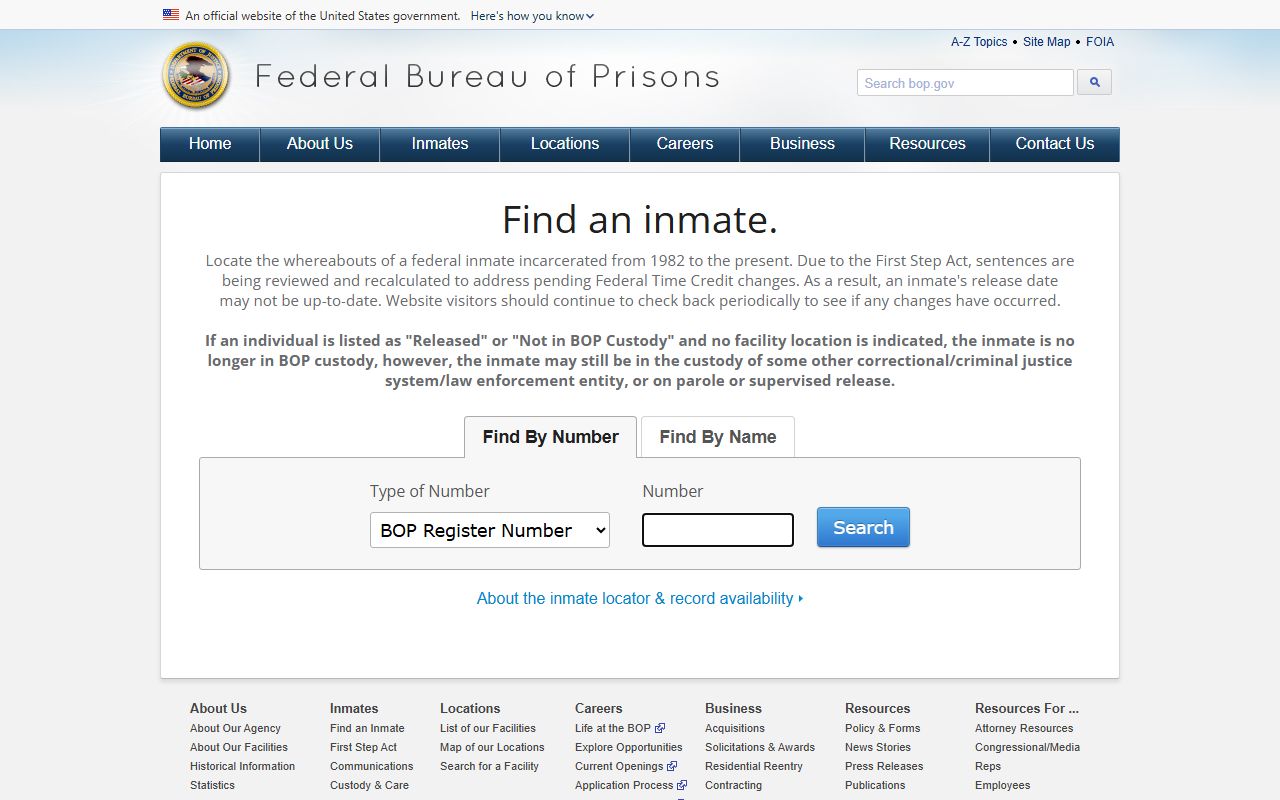
BOP records are useful when a federal sentence or transfer explains why a person no longer appears in a Texas county jail or TDCJ search.
Texas Jail Roster Fields
County jail rosters vary because Texas counties control their own systems. Some publish a live inmate search. Others post daily booking lists, use a vendor search, or require a direct records request. Most rosters still share a core set of fields. Those fields help confirm identity, explain current custody, and show why the person is being held. When a county does not publish one of these fields online, the county may still have the record internally and may route the request through the Texas Public Information Act.
| Field Label | Type | Typical? | Notes |
|---|---|---|---|
| Last Name | Text | Yes | The most common first search field on county jail rosters. |
| First Name | Text | Common | Helps separate similar last names in large counties. |
| Booking Number | Text | Common | Identifies one jail booking, not every case in the person's history. |
| Booking Date | Date | Common | Shows when the county jail processed the person. |
| Facility | Dropdown or label | Varies | Important in counties with more than one jail or annex. |
| Charge | Text | Common | May differ from the charge later filed in court. |
| Bond | Amount or status | Varies | May show cash, surety, personal bond, or no-bond hold. |
Texas Inmate Profile Details
A Texas inmate profile can mean a county jail profile, a TDCJ profile, or a federal profile. Read the source label before relying on the fields. A booking record is not the same as a conviction record. A TDCJ record usually reflects a sentenced state case, while a county jail record may reflect a pending charge that has not been proven in court. The research notes that TDCJ email requests can return information such as TDCJ number, location, offense of conviction, incarceration history, current incarceration, and projected release date. TDCJ states that photos and Social Security numbers are not provided to the public through that email route.
| Field | What It Shows |
|---|---|
| Booking or TDCJ Number | A unique identifier for the jail booking or state-prison record. |
| Booking or Admission Date | The date local jail intake occurred or state custody began. |
| Charges or Offense | County accusations, filed charges, or state conviction offense depending on source. |
| Bond or Sentence | Release terms for county custody or sentence information for state custody. |
| Facility or Housing | The jail, TDCJ unit, federal facility, or holding location listed by the source. |
| Custody Status | Whether the person is in custody, released, transferred, or projected for release. |
TDCJ also offers an email request route for inmate information.
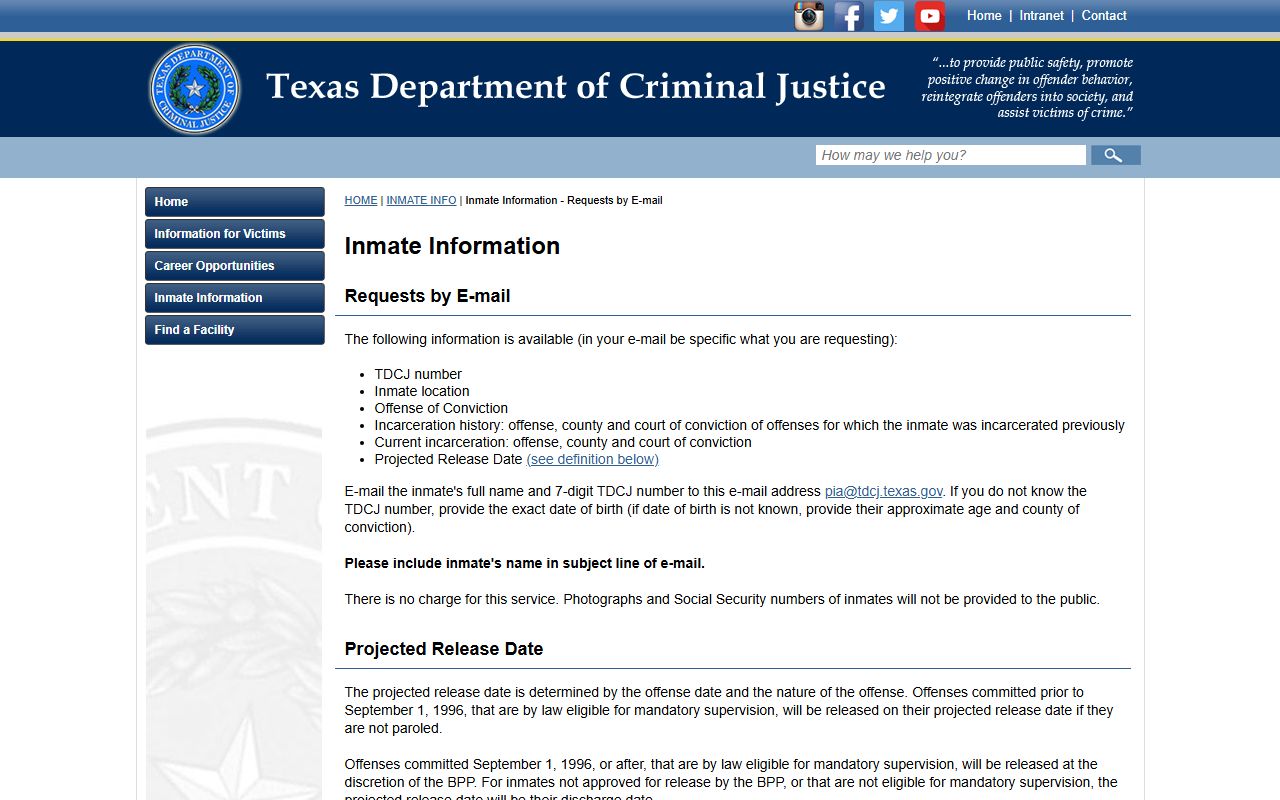
That route can help when the online TDCJ inmate search is not enough, but it still applies to state custody rather than county jail bookings.
Texas Detention Facilities
Texas inmate records sit behind a large facility map. The statewide directory includes county jails, city holding facilities, regional arrangements, TDCJ units, federal prisons, and ICE detention sites documented by the research. County subdomain pages give the local detail for jail addresses, phone lines, visitation rules, and facility-specific search steps. The statewide facility page is the routing layer for those local pages, not a replacement for the official agency record.
Texas Jail Rules Vary
Visitation, mail, phone accounts, tablets, commissary deposits, and release property are set at the facility level. Texas county jails do not share one schedule or one vendor. A county may use video visitation, in-person visits, a third-party phone vendor, local money orders, lobby kiosks, or online deposits. TDCJ units have their own rules, and federal or ICE facilities use federal procedures. Confirm the facility before sending funds or arriving for a visit, because a transfer can make a valid roster result stale in a short time.
Note: Confirm custody and facility rules before visiting, sending mail, or depositing money because Texas jail policies vary by county.
Request Texas Inmate Records
The Texas Public Information Act, Government Code Chapter 552, is the statewide open-records framework identified in the research. Jail records requests usually go to the county sheriff, county jail, or county records unit that holds the record. TDCJ records requests go through the TDCJ public-information process. Court case records follow court and clerk access rules, and the Texas Judicial Branch open-records policy distinguishes judicial administrative records from court case records. If a record involves juveniles, medical data, sealed cases, security details, or an active investigation, the agency may redact or withhold parts of it.
The statewide statute source is Texas Government Code Chapter 552.
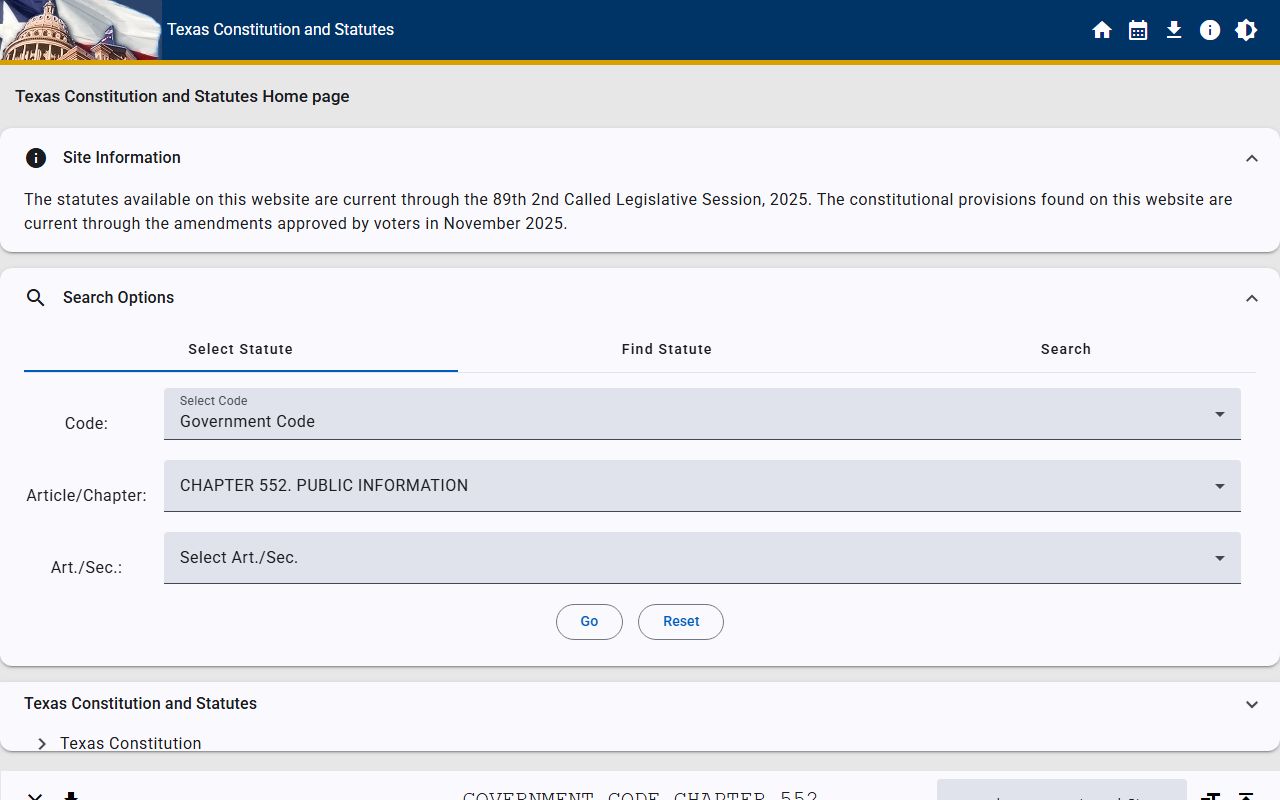
Use the statute as the access framework, then send the request to the agency that actually created or maintains the inmate record.